Introduction: The Power of Play
Gaming has transformed from a simple pastime into one of the most influential and creative industries in the world. What was once considered a niche hobby for teenagers has now become a cultural, artistic, and economic powerhouse that spans across generations, countries, and technologies. From the earliest arcade machines to massive open-world experiences that stretch across virtual landscapes, gaming has evolved into a form of entertainment that rivals film, television, and even literature in storytelling and emotional impact.
But beyond entertainment, gaming has also become a reflection of human creativity and technological advancement. It’s a medium that allows us to explore alternate realities, compete with friends across continents, and even learn new skills while having fun. To understand the depth of modern gaming, we must look at where it began, how it evolved, and where it’s heading in the future.
The Origins of Gaming: A Digital Spark
The story of gaming begins in the laboratories and universities of the mid-20th century. Early computer scientists and engineers experimented with ways to make computers interactive. One of the first known games, “Tennis for Two,” was created in 1958, followed by the more famous “Pong” in 1972. These games were simple by today’s standards—just dots and lines moving across a screen—but they sparked something profound.
The idea that computers could be used for fun was revolutionary. It showed that technology could bring people joy, competition, and engagement. The 1970s saw the birth of arcade machines, where games like “Space Invaders” and “Pac-Man” captured the imagination of millions. Arcades became social spaces, and gaming started to carve out its own place in popular culture.
The Golden Age of Consoles
As technology advanced, so did the possibilities for gaming. The 1980s introduced home consoles, allowing people to experience arcade-like excitement in their living rooms. Systems like the Nintendo Entertainment System (NES) and the Sega Master System brought iconic characters like Mario and Sonic into homes worldwide.
This era defined what gaming could be. Developers experimented with storytelling, world-building, and music in ways that had never been done before. Titles like The Legend of Zelda, Metroid, and Final Fantasy turned gaming into an art form. The joy of discovering secrets, overcoming challenges, and saving the world resonated deeply with players.
It wasn’t just about pressing buttons; it was about escaping into a new world where imagination was the only limit. The 1980s and early 1990s were truly the golden age of gaming innovation.
The Rise of 3D Worlds
When the 1990s arrived, the next great leap in gaming came with the introduction of 3D graphics. Suddenly, players could move through spaces that felt more real and expansive. Games like Super Mario 64 and Tomb Raider redefined how people interacted with virtual environments.
The PlayStation, Nintendo 64, and later the Sega Dreamcast became legendary consoles that shaped an entire generation of gamers. Developers began exploring cinematic storytelling, using voice acting, cutscenes, and detailed visuals to make players feel like part of a living world.
This was also the decade when competitive gaming began to take shape. Multiplayer experiences like GoldenEye 007 and Quake brought friends together for epic battles. For the first time, gaming wasn’t just a solo adventure—it was a shared experience, filled with laughter, rivalry, and teamwork.
The Internet Revolution and Online Play
The late 1990s and early 2000s introduced a change that would forever transform gaming: the internet. Online connectivity allowed players to compete, cooperate, and communicate globally. Titles like Counter-Strike, StarCraft, and World of Warcraft laid the foundation for online gaming communities that still thrive today.
For many, gaming became more than a hobby—it became a social network. Players formed friendships that transcended geography and culture. The sense of belonging in online guilds, clans, and teams helped shape the early identity of the online gaming world.
Consoles also embraced this revolution. The Xbox Live service, launched in 2002, brought console gamers into the online ecosystem. It was no longer about playing next to your friends—it was about playing with anyone, anywhere.
The Birth of Esports
As online gaming grew, so did competition. What began as small local tournaments evolved into massive global events with million-dollar prize pools. The rise of esports turned gaming into a legitimate spectator sport.
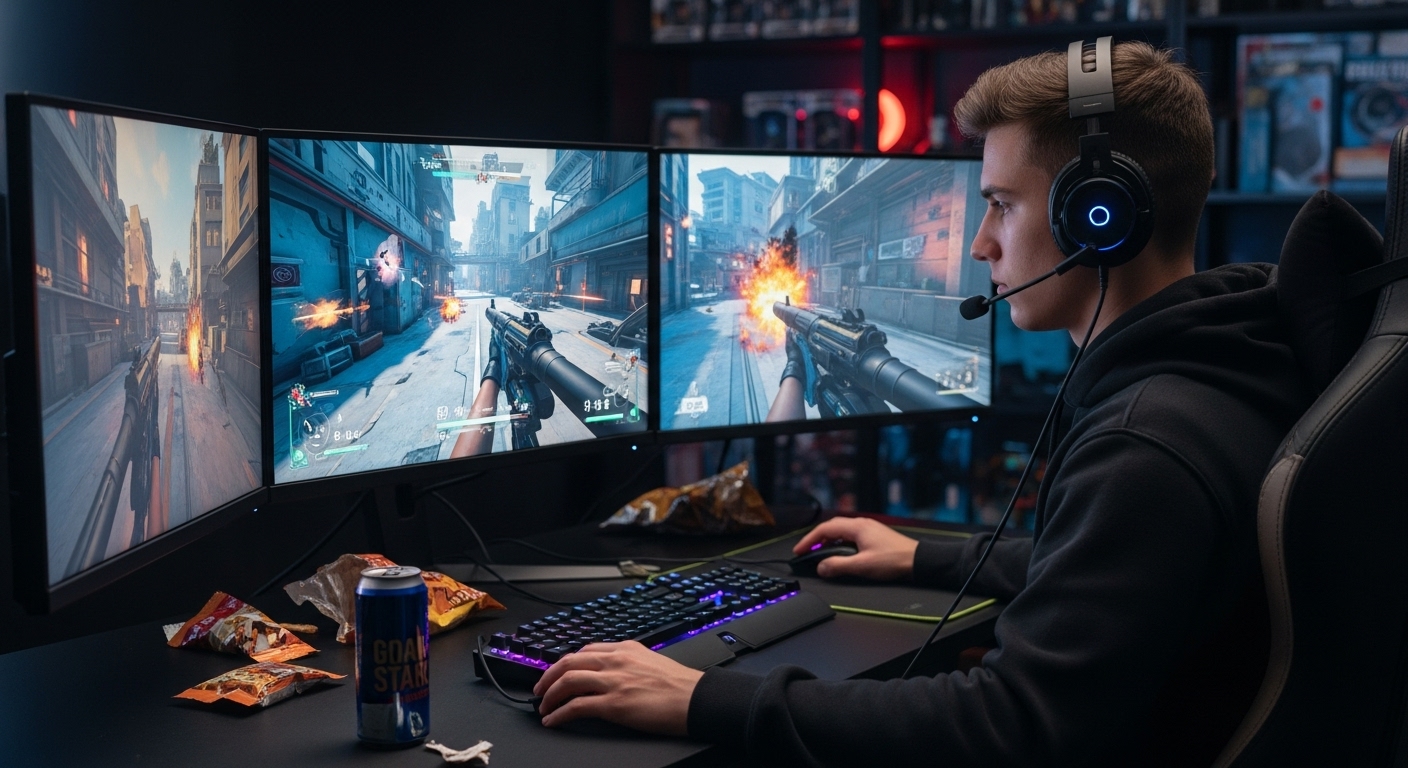
Games like League of Legends, Dota 2, Counter-Strike: Global Offensive, and Overwatch began filling arenas with cheering fans. Millions watched live streams to see their favorite teams battle for glory. Professional gamers became celebrities, and entire organizations formed around the pursuit of digital victory.
Esports proved that gaming required not just reflexes, but also strategy, teamwork, and dedication. It also showed that gaming could be a career path—something that would have been unimaginable a few decades earlier.
The Power of Storytelling in Games
While competitive gaming captured the spotlight, narrative-driven games also flourished. Developers began treating games as a storytelling medium equal to film or literature. Titles like The Last of Us, Red Dead Redemption, and Bioshock demonstrated that games could evoke deep emotions and deliver powerful messages.
Players weren’t just watching a story—they were part of it. Every choice, every action, had consequences. This interactivity made gaming uniquely personal. A well-crafted game could make players laugh, cry, or reflect in ways no other medium could.
Indie developers, empowered by digital distribution platforms, also began telling intimate and innovative stories. Games like Journey, Celeste, and Undertale showed that passion and creativity mattered more than big budgets. The indie scene became the heart of experimentation, pushing boundaries and redefining what gaming could mean.
The Evolution of Graphics and Realism
As technology advanced, the visual fidelity of games reached stunning new heights. Modern titles now feature lifelike environments, realistic physics, and detailed animations that blur the line between reality and imagination.
Engines like Unreal and Unity have given developers the power to craft breathtaking worlds. With the advent of ray tracing and AI-powered rendering, light and shadow behave just as they do in the real world. Every texture, sound, and motion contributes to an immersive experience that feels alive.
Yet, realism isn’t just about visuals. It’s about emotion, immersion, and believability. Developers have learned that a game doesn’t need to look real to feel real. Art styles vary—from the vibrant colors of Fortnite to the haunting landscapes of Elden Ring—each creating its own unique atmosphere and identity.
The Rise of Open-World Games
One of the most defining trends in modern gaming is the rise of open-world design. Instead of following a strict path, players are free to explore vast environments filled with secrets, challenges, and adventures.
Games like The Witcher 3, Grand Theft Auto V, and Breath of the Wild have redefined player freedom. They give players a world that feels alive, where every mountain can be climbed and every character has a story to tell.
Open-world games reflect the growing desire for agency and discovery. Players want to create their own stories, to find meaning in the journey rather than the destination. This philosophy has made open-world design one of the most beloved aspects of modern gaming.
The Social Side of Gaming
Gaming has always been about connection. Whether it’s couch co-op, online multiplayer, or shared experiences through streaming, the social side of gaming continues to thrive.
Platforms like Discord, Twitch, and YouTube Gaming have created communities where players can share their experiences, discuss strategies, and celebrate victories together. Streaming has even turned gaming into performance art, where personalities entertain millions simply by playing and interacting.
Gaming isn’t just about escaping reality anymore—it’s about creating shared moments. It’s about laughing with friends during chaotic matches, helping strangers in online worlds, or bonding over a shared love for a particular franchise.
The Mobile Gaming Revolution
When smartphones became powerful enough to run complex games, the industry experienced another seismic shift. Suddenly, everyone had access to gaming in their pocket.
Mobile titles like Clash of Clans, PUBG Mobile, and Genshin Impact have proven that gaming on the go can be just as engaging as console or PC experiences. Mobile gaming brought accessibility and convenience, breaking down barriers for casual players while still offering depth for those who crave competition.
The simplicity of tapping and swiping introduced gaming to people who might never have picked up a controller. It expanded the gaming audience to billions, making it the largest segment of the industry today.
Virtual Reality and the Future of Immersion
As technology continues to evolve, virtual reality (VR) has emerged as one of gaming’s most exciting frontiers. VR allows players to step directly into digital worlds, interacting with environments as if they were truly there.
Games like Half-Life: Alyx and Beat Saber demonstrate how powerful this immersion can be. The ability to look around, move naturally, and feel present in a virtual space creates a level of engagement unlike anything before.
While still developing, VR represents the next step toward total immersion. Combined with augmented reality (AR) and artificial intelligence, the future of gaming could blur the boundaries between the real and the virtual.
The Role of Artificial Intelligence in Gaming
Artificial intelligence has quietly become one of the most transformative forces in game development. From smarter non-player characters (NPCs) to dynamic environments that respond to player behavior, AI enhances immersion and realism.
In many games, AI controls enemy tactics, dialogue systems, and even narrative branching. Machine learning can generate procedural worlds, adapting the experience to each player’s style. In the near future, AI may even create personalized stories—unique adventures shaped entirely by your decisions and emotions.
AI also assists developers by automating tasks like animation, testing, and balancing, allowing more creativity and efficiency. The partnership between human imagination and artificial intelligence will likely define the next era of gaming innovation.
The Cultural Impact of Gaming
Gaming is no longer a subculture—it’s mainstream. It influences fashion, music, film, and even education. Iconic characters like Mario, Master Chief, and Lara Croft are recognized worldwide. Esports events draw larger audiences than some traditional sports. Game soundtracks are performed in concert halls, and virtual worlds host social gatherings, concerts, and celebrations.
Games also inspire creativity among players. The rise of modding communities, fan art, and content creation has turned gaming into a collaborative art form. It’s a shared cultural language, one that transcends age, nationality, and background.
Challenges and Controversies in the Industry
Despite its growth, gaming faces challenges. Issues like crunch culture, microtransactions, and toxicity in online communities remain ongoing concerns. Developers and players alike are pushing for healthier, more inclusive environments.
Representation has also become a vital topic. The industry is striving to reflect the diversity of its audience through characters, stories, and creators from all walks of life. Progress is being made, but there’s still work to do to ensure gaming remains a welcoming space for everyone.
Gaming as Art and Expression
More people now recognize gaming as a legitimate art form. It combines music, writing, design, and interactivity to evoke emotion and provoke thought. Games can tell profound stories, raise philosophical questions, and explore complex themes in ways no other medium can.
When players interact with a game, they become part of its artistic expression. Their choices shape the narrative, making every experience unique. Whether it’s the quiet sadness of Journey, the moral dilemmas of The Witcher 3, or the breathtaking beauty of Ghost of Tsushima, gaming offers an artful exploration of the human experience.
The Future of Gaming
Looking ahead, the future of gaming promises even greater innovation. Cloud gaming will allow players to stream high-end titles without expensive hardware. AI will continue to enhance design and storytelling. Augmented reality will merge digital and physical spaces, creating hybrid experiences that redefine what play means.
Moreover, as virtual worlds grow richer and more connected, gaming will continue to shape how we socialize, learn, and express ourselves. It will not just be about playing games—it will be about living experiences.
Conclusion: More Than Just a Game
Gaming has come a long way from its pixelated beginnings. It has grown into an industry that unites technology, art, and humanity in extraordinary ways. It gives us worlds to explore, challenges to overcome, and stories to remember.
Whether you play for competition, creativity, or connection, gaming is more than just a pastime—it’s a celebration of imagination and innovation. The future will bring new worlds, new experiences, and new ways to play, but the heart of gaming will always remain the same: the joy of discovery, the thrill of adventure, and the power of play.